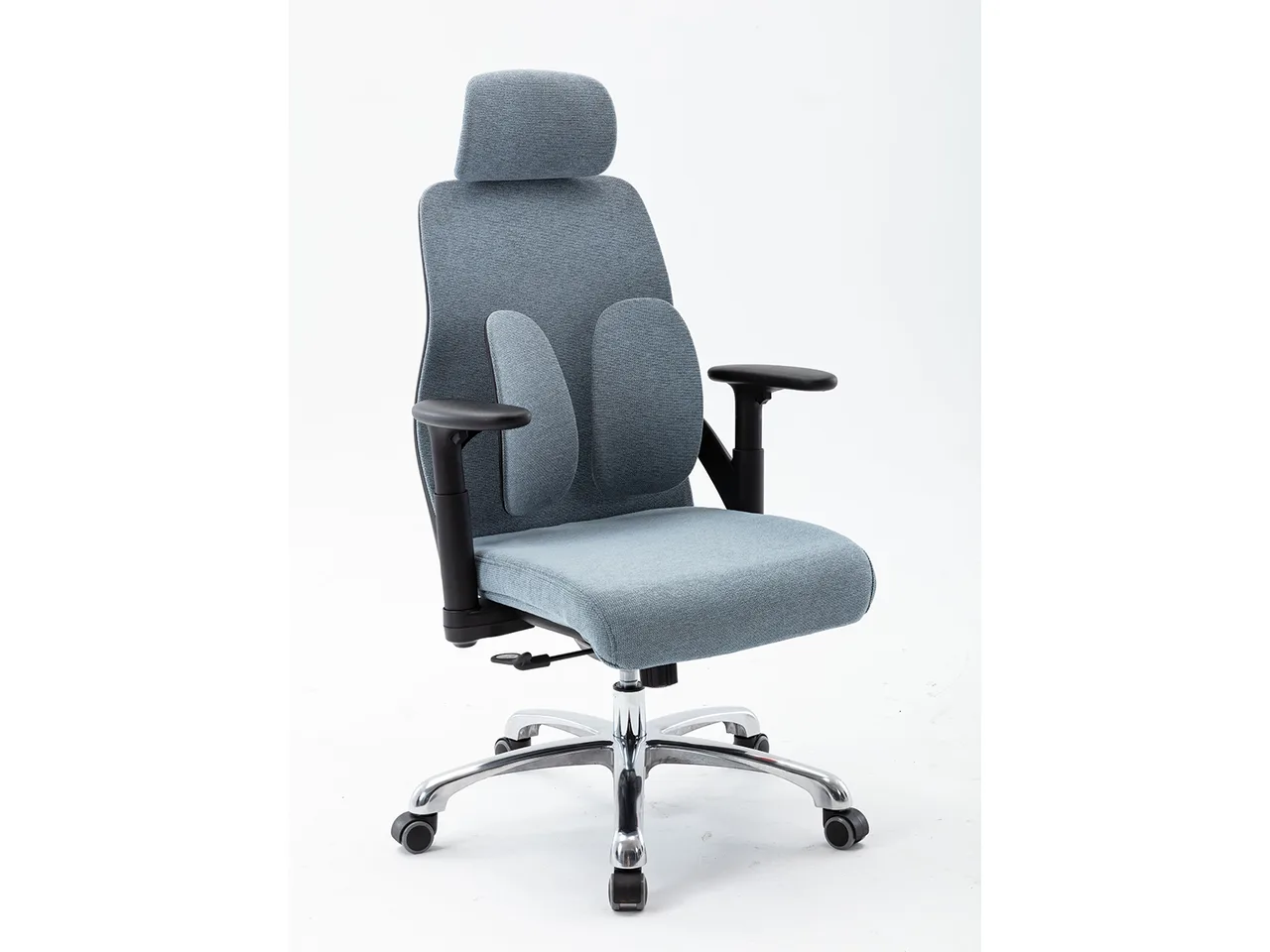
Most buildings need more than one kind of seat. A mixed-use development might want task chairs for the offices, fixed seating for an event hall, and care recliners for an assisted-living wing. The question we hear is whether to put all three on one supplier. The honest answer is "usually yes, but know where it strains" — and since we run all three lines, we will give both sides.
Why we run three different rooms at all
Shengxin started in 1990 in Anji — the part of China where a large share of the world's office chairs are made — and most factories here stop at the office chair. We added fixed cinema and auditorium seating and, more recently, elderly-care recliners. Those are three genuinely different engineering problems: a swivel task chair, a floor-mounted tip-up seat built to EN 12727, and a lift-assist recliner judged on getting a frail user back to their feet. Running them under one roof is unusual, and it is the whole reason a contract buyer can consolidate.
The real upside of consolidating
The savings are dull and significant. One supplier means one set of samples to approve, one quality conversation, one packing standard, and — the big one — the chance to fill containers across product lines. Office chairs are light and cube out fast; fixed-seating components and care recliners pack differently. Mixed into one load plan, the bulky and the light can balance a container that would otherwise ship half-empty if you bought each line from a different factory. One shipment, one set of documents, one point of accountability if something arrives wrong. If you want a sharper picture of how to think through loading a container of chairs efficiently, this container loading guide covers the practical detail.
Where it strains — and we will say so
The honest cost of consolidation is lead-time spread. A task chair on an existing mechanism samples in a couple of weeks; a fully custom fixed-seating run needs tooling and fire testing and takes considerably longer. If you tie a fast office order to a slow auditorium order on one PO, the whole shipment waits for the slowest line. So we often split the timeline even when we keep the supplier: ship the office chairs when they are ready, hold the hall seating to its own schedule. Consolidating the supplier does not have to mean consolidating the sailing.
The other limit is honesty about scope. We are a seating company. If a project needs something well outside chairs and fixed seating, we will say so rather than take an order we would run badly — that is in our about page and our buyer FAQ too, because it matters more than a sales line.
How we quote a mixed project
Send the whole brief — the rooms, rough quantities per line, and the dates each is needed — and we quote them as a set, with a separate timeline per line and a combined loading plan. You see where consolidation genuinely saves and where splitting the sailing protects your fastest-needed items. We build every line to its proper standard (BIFMA/EN for task chairs, EN 12727 patterns for fixed seating) and testing can be arranged per order.
One accountable contact when something goes wrong
The argument for one supplier that buyers feel most only shows up when there is a problem. If an office chair, a hall seat and a care recliner came from three factories and a shipment arrives with a damaged batch, you are now refereeing three suppliers who each blame the freight and each other. With one factory, one packing standard and one set of documents, a claim has one owner. That matters more on fixed seating and care chairs than on task chairs, because the replacement is not a parcel — it is a part shipped to a building, sometimes with an installer. We would rather carry that accountability than hand you a slightly cheaper line item and a finger-pointing problem in month four. It is also why we keep the spare-parts conversation open across all three lines, not just the one you ordered most of.
Got a project that spans more than one of these rooms? List them with quantities and target dates and we will come back with a plan that is straight about the trade-offs. Start at the contact page, browse the full range, or read how mixed orders run through our OEM/ODM process.